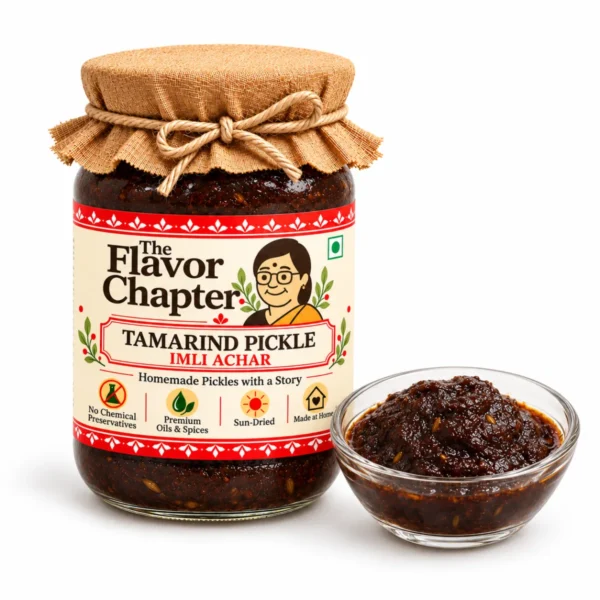

Tamarind Pickle Online — Homemade Tentul Achar
Ripe tamarind, crushed by hand and spiced slowly. Sharply sour, warmly finished.
Showing the single result
Products
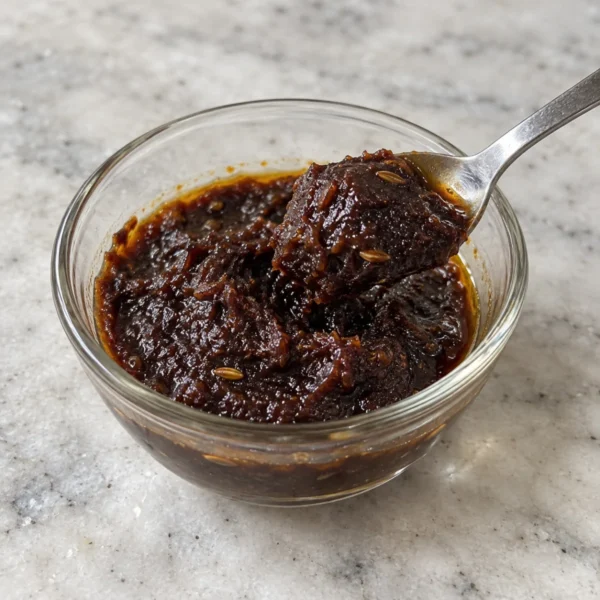
A tamarind pickle lives or dies on texture. Machine the pulp and you get a smooth paste that tastes flat; crush it by hand and it stays coarse and fibrous, with something to chew on in every spoon. Our tentul achar is made the second way, which takes longer and is the entire point.
What makes ours different
Crushed, not blended
Ripe tamarind worked by hand so the fibre survives. Most commercial imli achar is machined into a uniform paste.
No added acid
Every bit of the tang comes from the tamarind itself. No citric acid, no vinegar, no acidity regulator.
Sugar as a brake
Just enough sugar to keep the sourness in bounds. This is not a sweet tamarind chutney — it stays firmly on the sour side.
How tentul achar is made
- Ripe pods onlyDeseeded and cleaned by hand. Under-ripe tamarind is harsh rather than sour and never settles down, however long you rest it.
- Hand-crushingThe pulp is worked by hand into a coarse mass. This is the step that gives the finished pickle its body.
- SpicingCumin, fennel, ajwain, coriander paste, bay leaf, black pepper and dried chilli, then salt and a measured amount of sugar.
- RestingThe mixture sits until the ground spices absorb into the pulp and it stops tasting like tamarind plus spices.
Tamarind and fried fish. If you have not tried a small spoon of tentul achar alongside a plate of fried bhetki or rui, it is worth the experiment. It also thins with warm water into a quick chutney for chaat and samosa.
Tamarind pickle questions
Is tamarind pickle the same as imli achar?
Yes. Imli is Hindi, tentul is Bengali, tamarind is English — one fruit, three names. What varies between makers is the texture and how much sugar goes in. Ours is hand-crushed and only lightly sweetened, so it stays coarse and firmly sour.
How sour is it really?
Very. The tang lands on contact and makes your jaw tighten for a second before the spices arrive behind it. If you prefer something gentler, the sun-dried mango is tangy but considerably less aggressive.
Does tamarind pickle need refrigeration?
Not until it is opened. After that, refrigerate it and use a dry spoon each time. Store it in glass or ceramic — never aluminium, brass or iron, because the acid reacts with those metals.
How much should I use?
Half a teaspoon per plate. Tamarind pickle is the most concentrated jar we make, and a heaped spoon will overwhelm a meal rather than lift it.
Related
Try it against something sweet
Tamarind next to kuler achar is the sharpest contrast on our shelf. Any four jars for ₹699.